Shandelions Business Logo Review

Shandelions Home

For my student led project, I plan on creating my own set of personal branding materials for future creative freelance projects. The materials will include a logo, business card, and social media headers, including for my website.

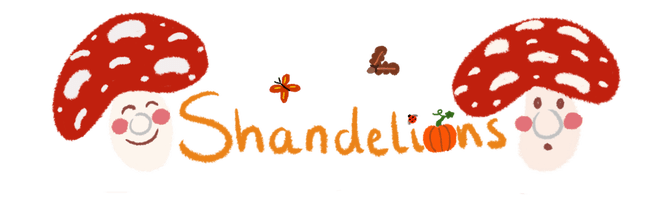
I chose a logo from a freelance artist that I follow closely on Instagram. She has a very specific, eclectic persona that helps market her artistic pursuits, including cosplay, wool felting, and illustration. She sells these products on her Instagram @shandelions and her website https://shandelions.bigcartel.com/.

What I admire about her branding is her utilization of three design principles: the Gestalt principle, balance, and colors of a similar tone. The Gestalt principle has to do with association due to proximity. If you go to her website, she sells a lot of merchandise focused on nature, with motifs of pumpkins, mushrooms, plants, and insects. The name that she goes by, Shan, is also on display within her username for her social media platforms Shandelions. The proximity of her most used motifs and her name incorporated into the word “dandelions” immediately creates a connection within the minds of users that Shan is a creator who loves nature, which her products reflect.

The balance of her hand-drawn elements is evident with the two similarly sized mushrooms closing in her name Shandelions, drawing the eye to her brand name. The other elements, including the butterflies, ladybug, and pumpkin, are small yet evident enough to allow her to display her earthy, eclectic personality without drawing the eye away from the primary content. Incorporating the ladybug and pumpkin into her name was a great way for the design to remain balanced yet true to her personality.

Lastly, her choice of colors also speak to her earthy persona and are appropriate to the colors she incorporates into most of her art. Not only do the colors display what she care’s about in her art, but the color scheme is not distracting because only a few colors are actually used just in varying values.

Overall, I want my branding materials to capture my own eclecticism and artistic personality to the success that I view Shan’s, using proximity, balance, and colors to her marketing advantage.
Pyperbleu Daily Art Challenge Design Review

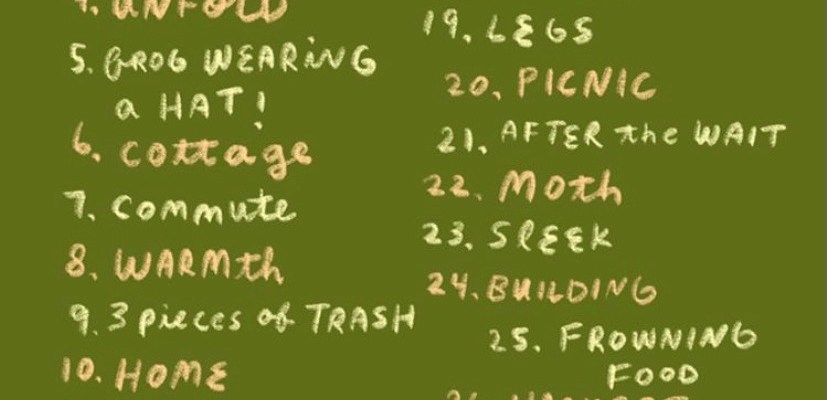
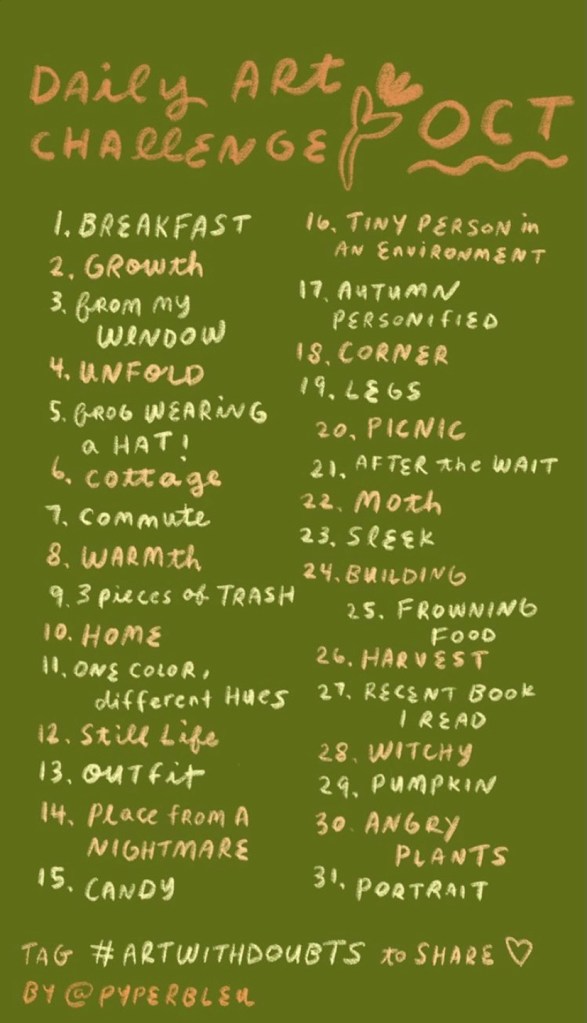
Pyperbleu (screen name for artist Annabelle on Instagram) created this design to showcase her daily plan for Inktober, a popular daily art challenge in October. Inktober usually refers to only ink drawing, but Pyperbleu decided to focus more on guache painting than ink drawings; thus, she titled this piece Daily Art Challenge: OCT instead of Inktober Prompts .

This design is appealing to me because of the natural color palette, handwritten font style, and simple drawings. Also, the format appeals to me because I love using Instagram for updates on my favorite artists. She used this picture for an Instagram story, which is evident because of the text’s size and organization.

The color palette, font, and doodles are appealing to me as an aspiring artist and writer because of the sketchy, creative aesthetic. Her art style always catches my attention because all of her informational posts are designed this way and reflects her branding as a freelance artist.

Introduce Yourself (Example Post)

This is an example post, originally published as part of Blogging University. Enroll in one of our ten programs, and start your blog right.

You’re going to publish a post today. Don’t worry about how your blog looks. Don’t worry if you haven’t given it a name yet, or you’re feeling overwhelmed. Just click the “New Post” button, and tell us why you’re here.

Why do this?

  • Because it gives new readers context. What are you about? Why should they read your blog?
  • Because it will help you focus your own ideas about your blog and what you’d like to do with it.

The post can be short or long, a personal intro to your life or a bloggy mission statement, a manifesto for the future or a simple outline of your the types of things you hope to publish.

To help you get started, here are a few questions:

  • Why are you blogging publicly, rather than keeping a personal journal?
  • What topics do you think you’ll write about?
  • Who would you love to connect with via your blog?
  • If you blog successfully throughout the next year, what would you hope to have accomplished?

You’re not locked into any of this; one of the wonderful things about blogs is how they constantly evolve as we learn, grow, and interact with one another — but it’s good to know where and why you started, and articulating your goals may just give you a few other post ideas.

Can’t think how to get started? Just write the first thing that pops into your head. Anne Lamott, author of a book on writing we love, says that you need to give yourself permission to write a “crappy first draft”. Anne makes a great point — just start writing, and worry about editing it later.

When you’re ready to publish, give your post three to five tags that describe your blog’s focus — writing, photography, fiction, parenting, food, cars, movies, sports, whatever. These tags will help others who care about your topics find you in the Reader. Make sure one of the tags is “zerotohero,” so other new bloggers can find you, too.

Introduce Yourself (Example Post)

This is an example post, originally published as part of Blogging University. Enroll in one of our ten programs, and start your blog right.

You’re going to publish a post today. Don’t worry about how your blog looks. Don’t worry if you haven’t given it a name yet, or you’re feeling overwhelmed. Just click the “New Post” button, and tell us why you’re here.

Why do this?

  • Because it gives new readers context. What are you about? Why should they read your blog?
  • Because it will help you focus your own ideas about your blog and what you’d like to do with it.

The post can be short or long, a personal intro to your life or a bloggy mission statement, a manifesto for the future or a simple outline of your the types of things you hope to publish.

To help you get started, here are a few questions:

  • Why are you blogging publicly, rather than keeping a personal journal?
  • What topics do you think you’ll write about?
  • Who would you love to connect with via your blog?
  • If you blog successfully throughout the next year, what would you hope to have accomplished?

You’re not locked into any of this; one of the wonderful things about blogs is how they constantly evolve as we learn, grow, and interact with one another — but it’s good to know where and why you started, and articulating your goals may just give you a few other post ideas.

Can’t think how to get started? Just write the first thing that pops into your head. Anne Lamott, author of a book on writing we love, says that you need to give yourself permission to write a “crappy first draft”. Anne makes a great point — just start writing, and worry about editing it later.

When you’re ready to publish, give your post three to five tags that describe your blog’s focus — writing, photography, fiction, parenting, food, cars, movies, sports, whatever. These tags will help others who care about your topics find you in the Reader. Make sure one of the tags is “zerotohero,” so other new bloggers can find you, too.

Introduce Yourself (Example Post)

This is an example post, originally published as part of Blogging University. Enroll in one of our ten programs, and start your blog right.

You’re going to publish a post today. Don’t worry about how your blog looks. Don’t worry if you haven’t given it a name yet, or you’re feeling overwhelmed. Just click the “New Post” button, and tell us why you’re here.

Why do this?

  • Because it gives new readers context. What are you about? Why should they read your blog?
  • Because it will help you focus your own ideas about your blog and what you’d like to do with it.

The post can be short or long, a personal intro to your life or a bloggy mission statement, a manifesto for the future or a simple outline of your the types of things you hope to publish.

To help you get started, here are a few questions:

  • Why are you blogging publicly, rather than keeping a personal journal?
  • What topics do you think you’ll write about?
  • Who would you love to connect with via your blog?
  • If you blog successfully throughout the next year, what would you hope to have accomplished?

You’re not locked into any of this; one of the wonderful things about blogs is how they constantly evolve as we learn, grow, and interact with one another — but it’s good to know where and why you started, and articulating your goals may just give you a few other post ideas.

Can’t think how to get started? Just write the first thing that pops into your head. Anne Lamott, author of a book on writing we love, says that you need to give yourself permission to write a “crappy first draft”. Anne makes a great point — just start writing, and worry about editing it later.

When you’re ready to publish, give your post three to five tags that describe your blog’s focus — writing, photography, fiction, parenting, food, cars, movies, sports, whatever. These tags will help others who care about your topics find you in the Reader. Make sure one of the tags is “zerotohero,” so other new bloggers can find you, too.